
Why You Keep Cooking the Same Dish Differently Every Time (And How to Fix It)
You made jollof rice last week. It was perfect. You made it again three days later — same recipe, same pot — and it tasted completely different.
You’re not imagining it. And the problem is not your recipe.
The problem is that you’re cooking by memory, not by understanding.
This is the single biggest mistake home cooks make. They follow steps without understanding why each step exists. So when something changes — a different brand of tomato, a slightly hotter flame, a busier afternoon — the whole dish shifts and they don’t know how to pull it back.
That’s what flavor control is. It’s not a technique. It’s understanding.
Here’s what actually controls flavor in any dish:
1. Salt timing
Salt added at the beginning of cooking draws out moisture and builds depth. Salt added at the end just sits on the surface. Most home cooks season only at the end — which is why their food tastes flat even when it’s “salty enough.”
2. Heat management
High heat builds crust and caramelization. Low heat builds tenderness and allows spices to bloom properly. Cooking everything on high because you’re in a hurry is the fastest way to destroy flavor depth.
3. Acid balance
This is the one nobody talks about. Every heavy, fatty, or spiced dish needs acid — lemon, tomato, vinegar — to cut through and make the flavor pop. Without it, food tastes heavy and muddy even when it’s well-seasoned.
4. Layering
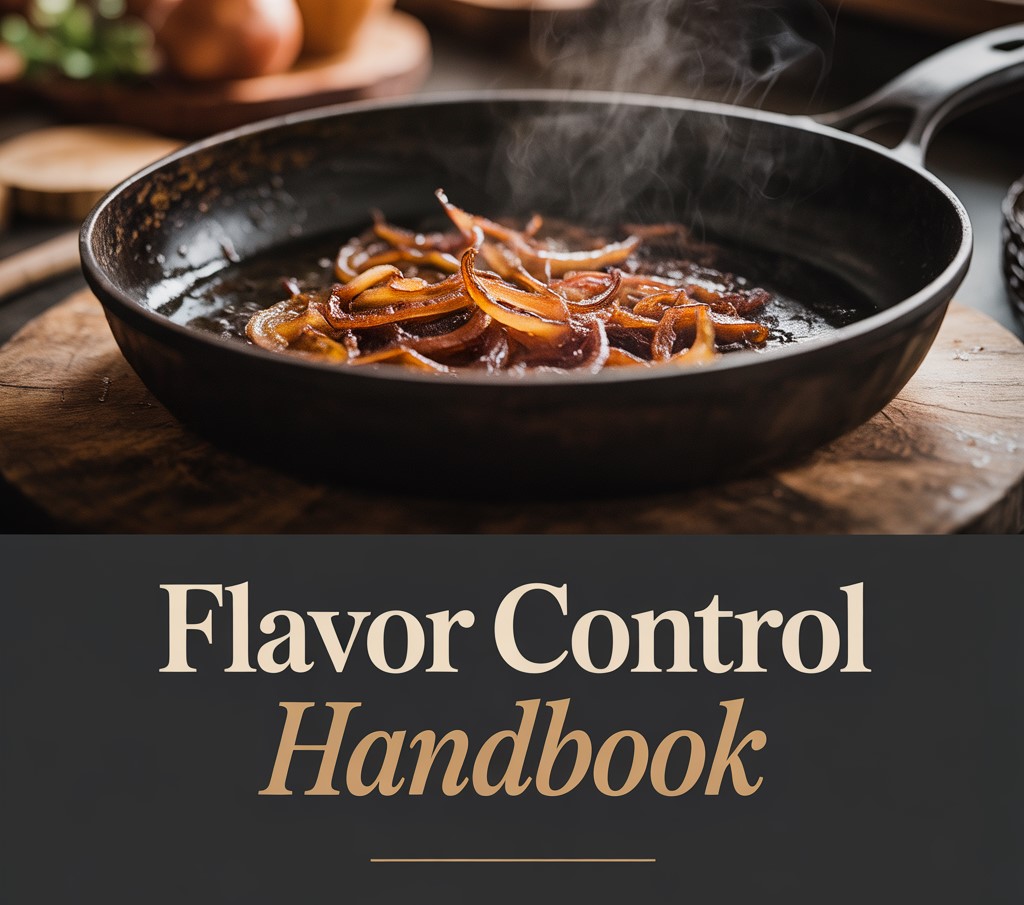
Flavor built in stages is always richer than flavor added all at once. Toast your spices before adding liquid. Fry your onions before adding tomatoes. Let each layer develop before moving to the next. There are no shortcuts here.
5. Consistency of your base ingredients
The tomato you bought from one market is not the same as the one from another. Fermented locust beans from one supplier have a different intensity than another brand. Your ingredients are variables. Until you understand how to adjust for them, your food will always be inconsistent.
This is what I teach — not recipes, but the thinking behind them.
When you understand flavor control, you stop depending on a recipe to save you. You start tasting, adjusting, and knowing exactly what your dish needs in real time.
That skill is worth more than any cookbook.
If you want to go deeper, the Spice Handbook on this site is a good starting point. It breaks down how individual spices behave, how to combine them, and how to build flavors that hold up every single time.
You can also follow along on Instagram where I post free tips, techniques, and short classes every week.
The food you’re capable of making is better than what you’re making right now. You just need the right understanding to get there.